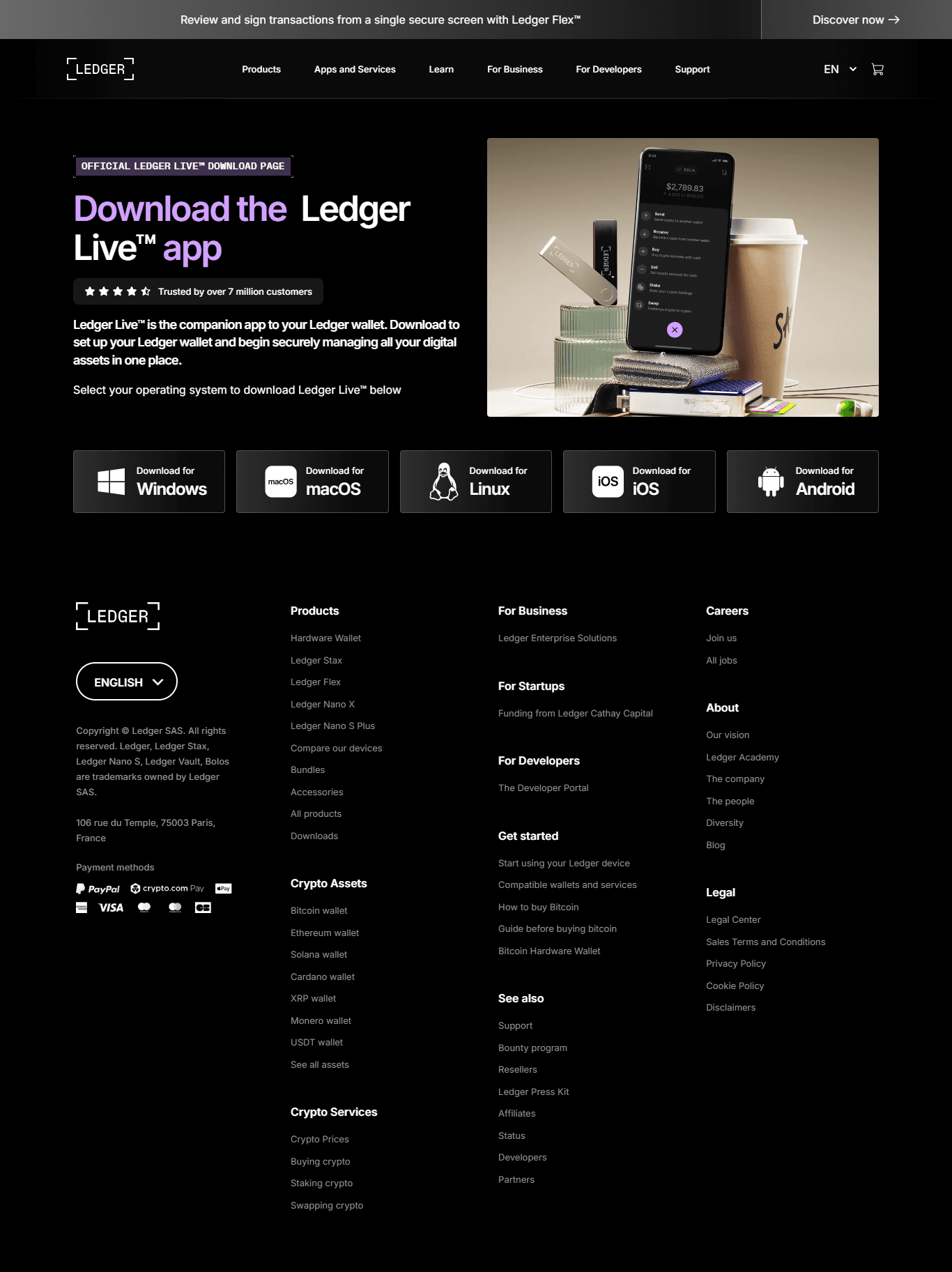
Ledger.com/start —
Cryptocurrency security is one of the most important aspects of digital asset ownership. With hacks, phishing attempts, and online fraud rising, relying solely on exchanges to store crypto is risky. That’s where Ledger hardware wallets come in — providing users with a secure, offline method to manage and protect their cryptocurrency. To ensure users set up their devices correctly, Ledger provides a step-by-step onboarding system through Ledger.com/start, a platform designed to guide both beginners and experienced users through the setup and management of Ledger wallets.
This guide explores everything a user needs to know about Ledger.com/start, how to properly initialize a Ledger wallet, the security principles behind it, how to manage crypto safely, and best practices for long-term usage.
1. What Is Ledger.com/start?
Ledger.com/start is the official web page provided by Ledger for initializing, configuring, and managing Ledger hardware wallets. This includes the Ledger Nano X, Ledger Nano S Plus, and the newer Ledger Stax. The site guides users through:
Downloading the official Ledger Live software
Setting up the device and creating a recovery phrase
Installing blockchain applications on the device
Managing multiple cryptocurrencies securely
Accessing advanced features such as staking and DeFi
Using Ledger.com/start ensures that users avoid scams or fake setup guides, which are common targets for hackers trying to steal crypto.
2. Unboxing Your Ledger Device
Before accessing Ledger.com/start, users should physically inspect the device. Steps include:
Verifying that the packaging is sealed and untampered
Checking that the device is brand new without any scratches or prior use
Ensuring that there are no pre-written recovery phrases included (Ledger devices never ship with pre-generated phrases)
Inside the box, users typically find:
The Ledger hardware device
A USB cable for connecting to a computer or mobile device
Blank recovery sheets for writing down the 24-word seed phrase
Instruction manuals
If anything seems suspicious, users should stop and contact Ledger support before proceeding.
3. Accessing Ledger.com/start
To start setting up the device:
Open a secure browser (avoid public Wi-Fi or shared devices).
Type Ledger.com/start manually — do not click links from emails or social media.
Follow instructions to download Ledger Live, Ledger’s official management application.
Ledger Live is available for Windows, macOS, Linux, Android, and iOS. Using the official software ensures users avoid malware or fake applications.
4. Installing Ledger Live
Once downloaded, open Ledger Live and begin the setup process:
Select Get Started
Choose the Ledger device model
Select “Set up as new device”
Ledger Live communicates with the device to initialize it, allowing the user to configure a PIN, create a recovery phrase, and install apps for different cryptocurrencies.
5. Creating a PIN Code
During initialization, Ledger devices prompt users to create a PIN. This PIN protects the device in case it is lost or stolen. Key tips:
Use a 4-8 digit PIN code
Avoid common sequences like “1234” or birthdays
The PIN must be entered on the physical device, not on the computer
If entered incorrectly three times, the device will reset to factory settings, protecting assets from unauthorized access
6. Generating and Storing Your Recovery Phrase
The 24-word recovery phrase (or seed phrase) is the master key to the wallet. It allows users to restore their funds on a new device if the original Ledger is lost, damaged, or stolen.
Steps:
The device will display each word of the recovery phrase one by one.
Write each word on the provided recovery sheet in the correct order.
Store the sheet offline in a secure location (ideally in a fireproof or waterproof safe).
Never store the phrase digitally — avoid photos, cloud storage, or notes apps.
Never share the recovery phrase with anyone. Ledger staff will never ask for it.
Loss or theft of the recovery phrase is the only way funds can be permanently lost. Therefore, protecting it is the highest priority.
7. Confirming the Recovery Phrase
After writing the recovery phrase, the Ledger device will ask the user to confirm a subset of words in the correct order. This step ensures the phrase was written accurately and will function correctly if restoration is needed.
8. Installing Blockchain Applications
Ledger Live allows users to install blockchain applications for specific cryptocurrencies. Each app is required for sending, receiving, or managing the respective token. Some popular examples include:
Bitcoin (BTC)
Ethereum (ETH)
BNB Smart Chain (BNB)
Solana (SOL)
Polygon (MATIC)
Avalanche (AVAX)
Litecoin (LTC)
Users can install and uninstall apps freely — uninstalling an app does not remove the funds stored on the blockchain.
9. Adding Accounts in Ledger Live
Once apps are installed, users create accounts inside Ledger Live:
Click Accounts
Add a new account for the desired blockchain
Connect the Ledger device and confirm account creation
This creates a live dashboard showing your cryptocurrency balances, transaction history, and portfolio value.
10. Receiving Cryptocurrency
To receive crypto:
Open Ledger Live and select Receive
Choose the blockchain and account
Confirm the address displayed on the Ledger device matches the one in Ledger Live
Share this address with the sender
Verifying the address on the device screen prevents phishing attacks or malware from altering the destination address.
11. Sending Cryptocurrency
To send crypto:
Open Ledger Live and click Send
Enter the recipient’s wallet address
Specify the amount
Confirm transaction details
Approve the transaction on the Ledger device
Ledger devices require physical confirmation, meaning unauthorized remote transactions are impossible.
12. Ledger Staking and Advanced Features
Ledger wallets also enable users to stake certain cryptocurrencies directly through Ledger Live, earning passive rewards. Supported staking coins include:
BNB
Cosmos (ATOM)
Tezos (XTZ)
Tron (TRX)
Polkadot (DOT)
Additionally, Ledger supports integration with DeFi protocols, allowing users to connect the wallet safely to decentralized platforms without exposing private keys.
13. Security Principles Behind Ledger
Ledger wallets are secure because:
Private keys never leave the device
All transaction confirmations require physical approval on the device
Ledger Live does not store private keys
Open-source firmware is regularly audited
Users retain full control over their crypto
Even if a computer or phone is compromised, the Ledger device keeps funds safe due to its offline architecture.
14. Common Mistakes and How to Avoid Them
Users should avoid:
Using unofficial apps or websites
Sharing the recovery phrase under any circumstances
Storing the recovery phrase digitally
Sending crypto to the wrong blockchain network
Trusting unsolicited messages claiming to be Ledger support
Following Ledger’s recommended procedures protects users from almost all common threats.
15. Lost or Damaged Device
If a Ledger wallet is lost, stolen, or damaged:
Acquire a new Ledger device
Select Restore wallet during setup
Enter the 24-word recovery phrase
All crypto accounts will be restored safely
As long as the recovery phrase is intact, assets cannot be stolen or lost permanently.
16. Ledger Support and Resources
Ledger provides comprehensive support, but users should note:
Ledger support will never ask for a recovery phrase
Guidance is available for firmware updates, device issues, and transaction inquiries
Ledger.com/start includes official documentation, tutorials, and troubleshooting tips
Always verify you are on the official site before following instructions.
17. Best Practices for Long-Term Security
For maximum safety:
Store multiple copies of the recovery phrase in secure, offline locations
Consider metal backups for fireproof and waterproof protection
Regularly update Ledger Live and device firmware
Only install apps you actively use
Verify crypto addresses on the device screen for every transaction
These steps minimize risk while maintaining control over assets.
18. Why Ledger.com/start Matters
Ledger.com/start is not just a setup guide; it is a security-first onboarding system. By following the instructions carefully:
Users ensure the recovery phrase is safely stored
The device firmware is up-to-date
All apps and accounts are properly installed
Crypto assets remain fully under the user’s control
In other words, Ledger.com/start provides a step-by-step roadmap to protect your wealth in the digital economy.
19. Summary
Ledger.com/start simplifies the initial setup of Ledger hardware wallets while emphasizing security and user autonomy. Through its guided process, users can:
Set up a new device
Create a PIN
Generate and secure a 24-word recovery phrase
Install blockchain apps and manage multiple accounts
Send and receive crypto safely
Access staking and DeFi features
Ledger wallets protect crypto in a way that no software-only solution can. With proper adherence to Ledger.com/start instructions and recovery phrase best practices, users achieve the highest level of crypto security.
Ledger.com/start is the official gateway to using Ledger wallets safely, providing both guidance and assurance that crypto users maintain full ownership and control of their assets. Following this workflow ensures your funds are protected against hacks, phishing, and device loss, while enabling you to participate fully in the growing world of cryptocurrencies and Web3.